How Nethook achieved a 33% click-to-open rate, without hurting deliverability.
A fishing products company combined traffic de-anonymization, intent data, and Sigmail signatures to break into the corporate gifting market with a strategy most people would never think of.

5,620
Emails Sent
3,074
Opens
1,005
Signature Clicks
33%
Click-to-Open
Nethook sells fishing products. Reels, bait, tackle, rods. They have a strong consumer brand and a website that gets consistent traffic from anglers across the US.
Their team wanted to break into a new revenue stream: co-branded fishing products for corporate gifting. Think employee appreciation packages, client thank-you gifts, event giveaways. Companies spend billions on this stuff every year, and Nethook had products that would stand out next to the usual branded mugs and tote bags.
But there was a problem with going after this market the traditional way.
You can't just pull a list of corporate gifting buyers and pitch them fishing gear. A procurement manager comparing branded merchandise vendors has no reason to care about fishing reels. For a co-branded fishing product to make sense as a corporate gift, the person making that decision needs to already care about fishing. They need to be emotionally invested in the sport. Otherwise, you're just another cold email selling something irrelevant.
So Nethook needed to find a very specific type of person: someone who loves fishing and also has corporate buying power or influence over a company's gifting and promotions budget.
That's not a list you can buy off the shelf.
Finding fishing enthusiasts who happen to run companies.
Nethook already had exactly the audience they needed visiting their website every day. Their site was pulling in nearly 60,000 users — people browsing reels, comparing bait, reading product reviews. People who care about fishing enough to spend time on a fishing products site.
The problem was that these visitors were anonymous. They came, they browsed, they left. No form fill. No email. No way to know who they were or where they worked.
Nethook installed Sigmail's traffic de-anonymization on their site. Out of 59,739 total visitors, the technology identified 30,943, a 52% identification rate. These weren't just anonymous IPs turned into email addresses. Each identified visitor came with enriched profile data: name, email, phone number, employer name, job title, and LinkedIn profile.
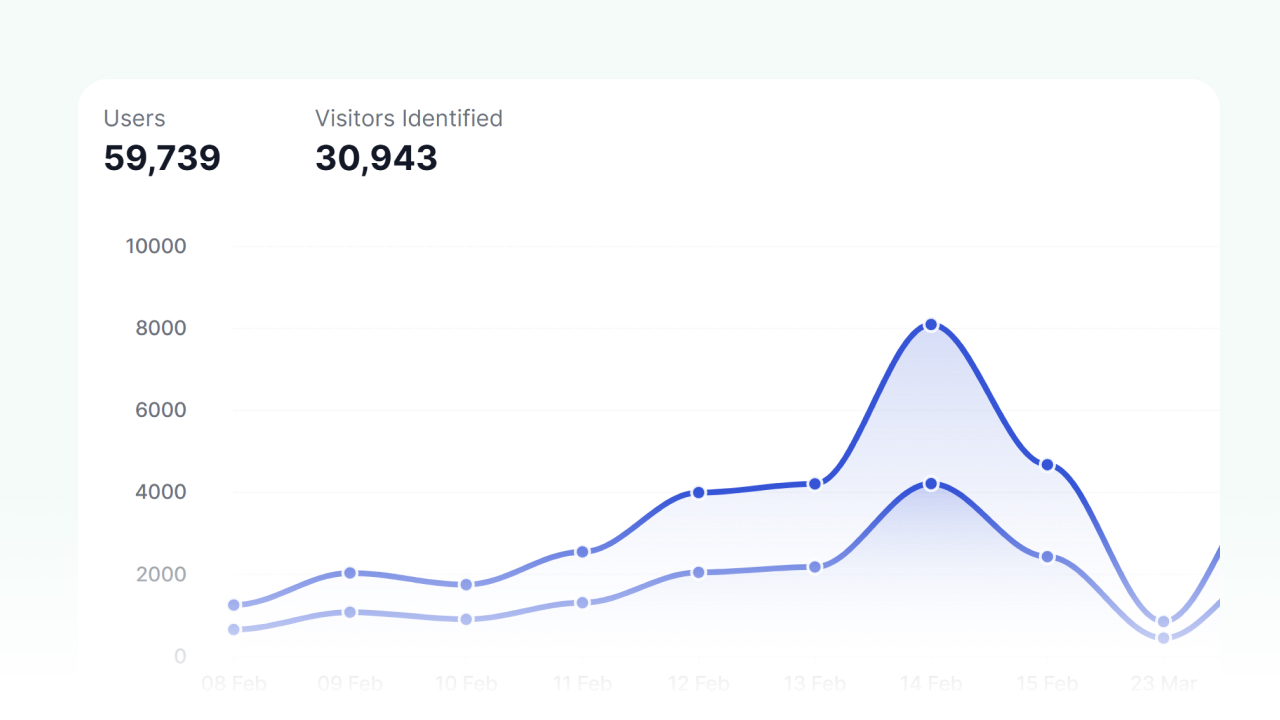
Nethook's de-anonymization results: 30,943 visitors identified from 59,739 total users
The quality of the identified data went far beyond basic contact information. Of the 14,838 enriched contacts, 2,629 had business emails, 4,381 had LinkedIn profiles, and 1,599 had job titles identified. We then used Clay's waterfall enrichment to validate and recover emails, turning the raw data into a verified sending list of 1,038 contacts ready for outbound.
How we used Clay to extract B2B contacts from B2C traffic
The full breakdown of how we turned 14,838 de-anonymized consumer visitors into 1,038 verified B2B contacts using waterfall enrichment.
Read articleNow they could see something that was previously invisible: which of their fishing-enthusiast visitors also worked at companies. And not just any companies. They could filter for titles and company sizes that suggested budget authority over things like employee programs, marketing, or procurement.
This was the core insight. Instead of trying to convince random corporate buyers to care about fishing, Nethook could reach out to people who already loved fishing and happened to be in a position to bring those products into their workplace.
Scaling beyond their own traffic.
The de-anonymized visitor list was a strong starting point, but it was limited to the volume of traffic their site received. Nethook wanted to reach more people like this, faster.
They used Sigmail's intent data platform to build a second audience. They searched for B2B intent signals around keywords like employee gifting, corporate giveaways, branded merchandise, and promotional products. These were people actively researching gifting solutions right now.
Every two days, they pulled a fresh list. Real-time signals, updated daily, so they were always reaching people at the moment of highest interest.
The two audiences worked together. From their own website, they had fishing enthusiasts with corporate connections. From intent data, they had corporate gifting buyers showing active purchase intent. Some contacts appeared in both, which made them the highest priority targets.
Making every email count.
Nethook launched cold email campaigns to these audiences. The pitch was simple: your company runs gifting programs, you personally love fishing, here's how we can create co-branded fishing products your team will actually want to keep.
Every email included a Sigmail signature with multiple touchpoints. A CTA button linking to their co-branding page. Links to their website, LinkedIn, and Instagram. A clickable banner showcasing product examples.
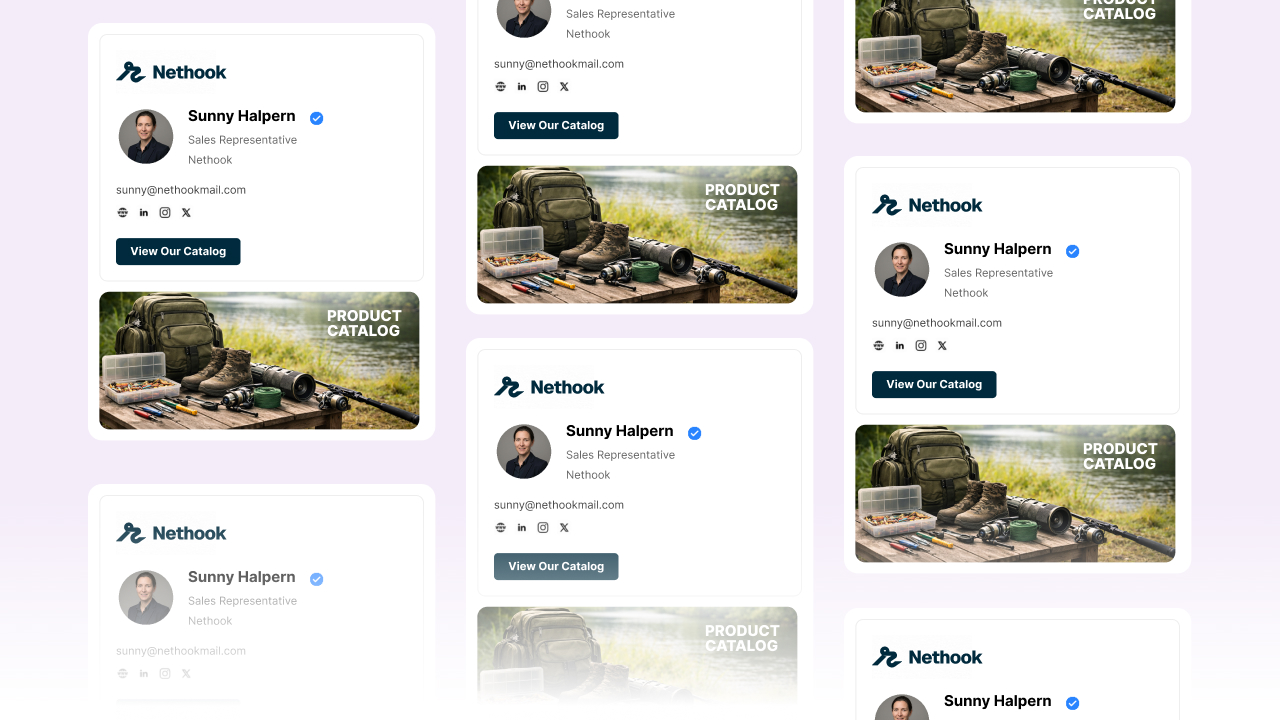
Nethook's Sigmail email signatures with multiple clickable touchpoints
Most outbound teams would never do this. The conventional wisdom is that adding HTML signatures to cold emails will trigger spam filters. Open rates will drop. Emails will land in promotions or junk folders.
Nethook tested it anyway.
Open rates held. Clicks exploded.
5,620 emails sent. 2,092 contacts reached. Open rates averaged 40% across campaigns, with top-performing campaigns exceeding 60%.
No deliverability issues. No spam flags. The signatures didn't make a dent in open rates.
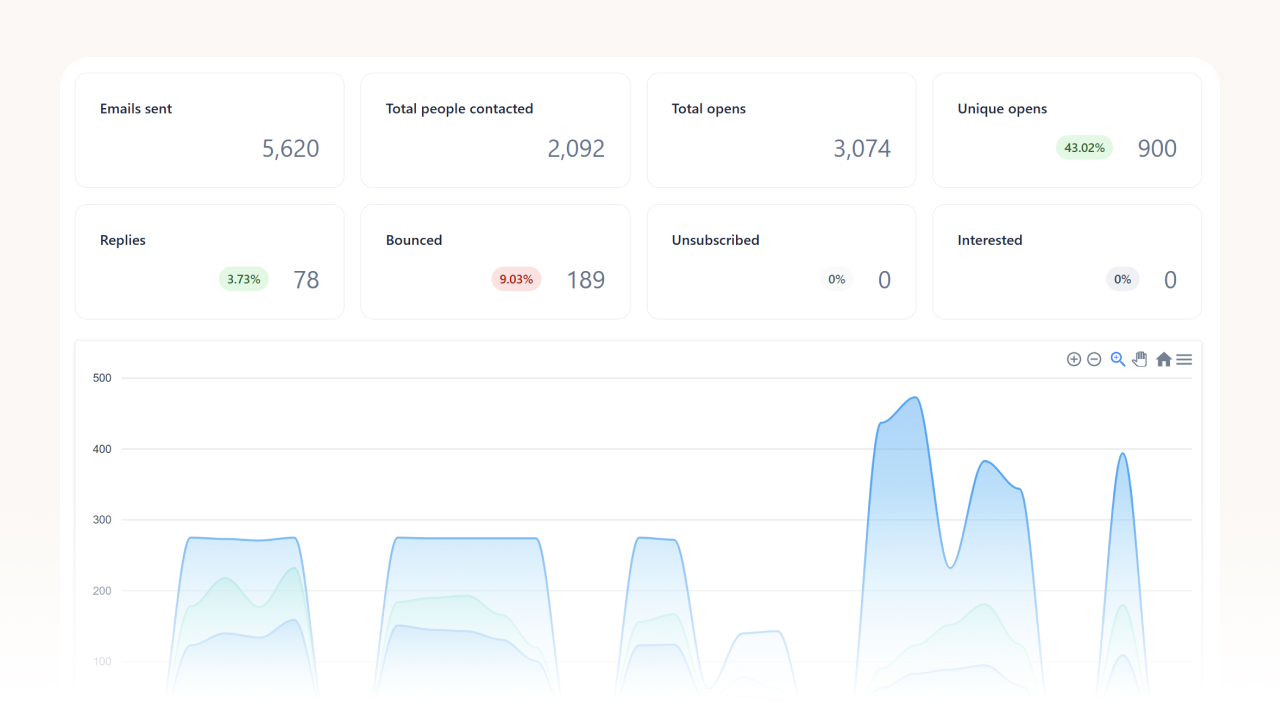
Nethook's actual outbound campaign performance data
But the engagement numbers told a completely different story than a typical cold outbound campaign.
From 3,074 opens, the Sigmail signatures generated 1,005 clicks from real people.
For every 3 people who opened a Nethook email, one clicked a link in the signature.
In most cold outbound, you're lucky if someone clicks on one link. Most emails get opened, skimmed, and archived. The prospect might be mildly interested, but not enough to take the one specific action you're asking for.
Nethook's emails gave people multiple reasons to engage. And they did.
Where the 1,005 clicks went
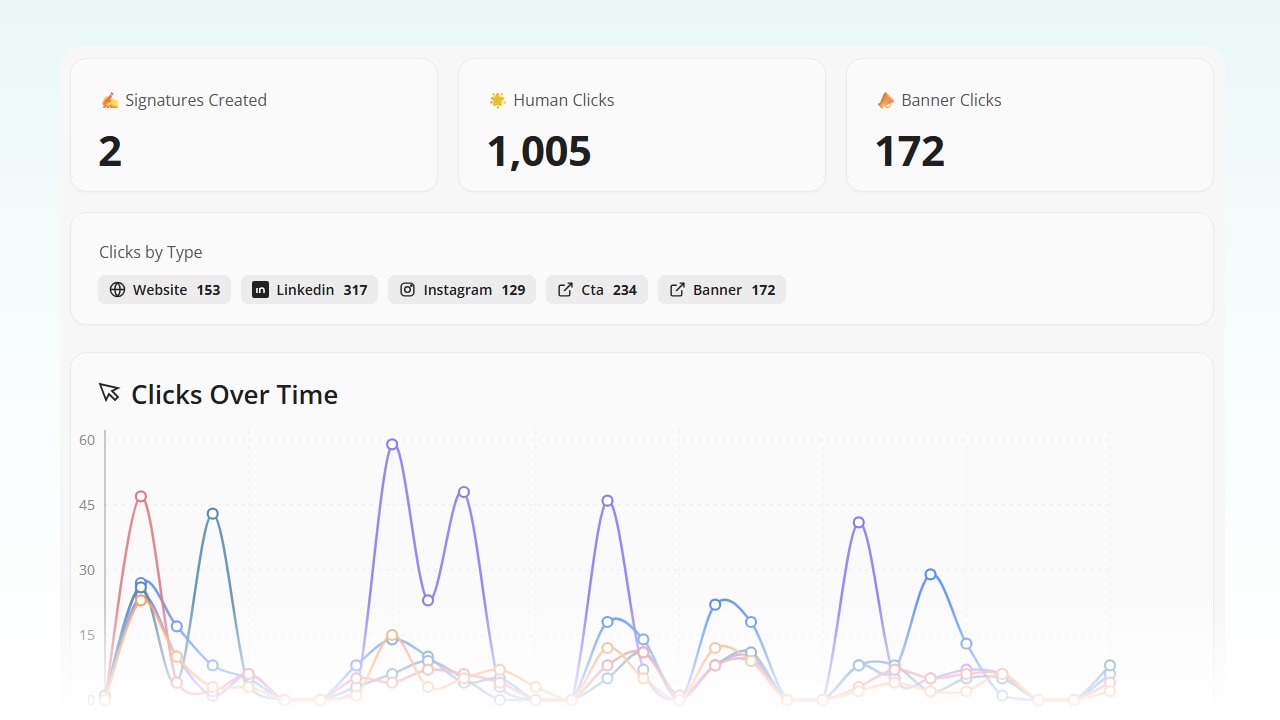
Signature click analytics from Nethook's Sigmail dashboard. Counts exclude link scanners: email security tools open every link in a message, and Sigmail filters those out.
LinkedIn: 317 clicks. The most clicked link. Prospects wanted to see who was reaching out. They checked profiles, looked at the company, assessed credibility. In a cold outbound context, this is huge. It means the prospect is doing their own research on you before you even get a reply.
CTA: 234 clicks. The primary call to action, linking to their co-branding inquiry page. This is the "hand raiser" click, the one most cold emails would have as the only option.
Banner: 172 clicks. The signature banner, showcasing co-branded product examples, outperformed both the website and Instagram links. A picture of the product did more than a link to it.
Website: 153 clicks. People went to explore products. Even in an email about corporate gifting, the consumer brand pulled people in. They wanted to see what they'd be putting their company's name on.
Instagram: 129 clicks. Visual content still pulled 129 clicks on its own. Prospects wanted to see the products in context. The lifestyle. The brand aesthetic. This is something a plain-text cold email could never achieve.
Why a 33% click-to-open rate changes the math on cold outbound.
Most cold emails work like this: you send a message, you include one link, and you hope the prospect is ready to take that exact action at that exact moment. If they're not, the email is dead. You got an open, but nothing came of it.
With Sigmail signatures, every email has five or six clickable touchpoints. The prospect might not be ready to fill out an inquiry form today. But they'll check your LinkedIn. They might not visit your co-branding page. But they'll tap on Instagram to see what the products look like.
Each of those clicks tells you something. It tells you the prospect is interested. It tells you which channel they prefer. And it keeps your brand visible across multiple platforms from a single email.
Nethook didn't just get opens. They got engagement across every channel they included in their signature. One email, multiple touchpoints, all tracked.
The deliverability question, answered.
Common objection
"Won't signatures hurt my deliverability?"
No. Sigmail signatures are designed to be extremely lightweight, leveraging the most rudimentary HTML building blocks. No heavy images. No complex nested tables. Nothing that raises flags with spam filters.
Nethook's open rates confirm this. 40% average. 60%+ on top campaigns. These are strong numbers for any cold outbound, and they held steady with signatures included.
The signatures didn't hurt deliverability. They made every delivered email generate significantly more engagement.
Three products. One workflow.
What makes Nethook's results possible isn't any single product. It's how the three pieces work together.

Traffic De-anonymization
Found fishing enthusiasts visiting their site who also had corporate buying power. This was an audience that didn't exist in any database. It could only be built by identifying real visitors on a fishing products website and enriching their profiles with company data.

Intent Data
Scaled the operation beyond Nethook's own traffic. Fresh lists every two days of people actively researching corporate gifting. Real-time signals at the moment of highest purchase intent.

Sigmail Signatures
Turned every outbound email into a multi-touch engagement. Not one link and a prayer, but five or six clickable touchpoints that turned a third of opens into clicks.
The result: 1,005 signature clicks from 5,620 cold emails, 18 for every 100 sent. A new revenue stream built from scratch. And a cold outbound operation that performs better than most companies achieve with warm leads.
Ready to get started?
Create your first professional email signature in minutes. No credit card required.